DST Roofing Services in Kansas City, MO
Commercial roofing for Delaware Statutory Trust (DST) properties and 1031 exchange investors throughout Kansas City, MO.
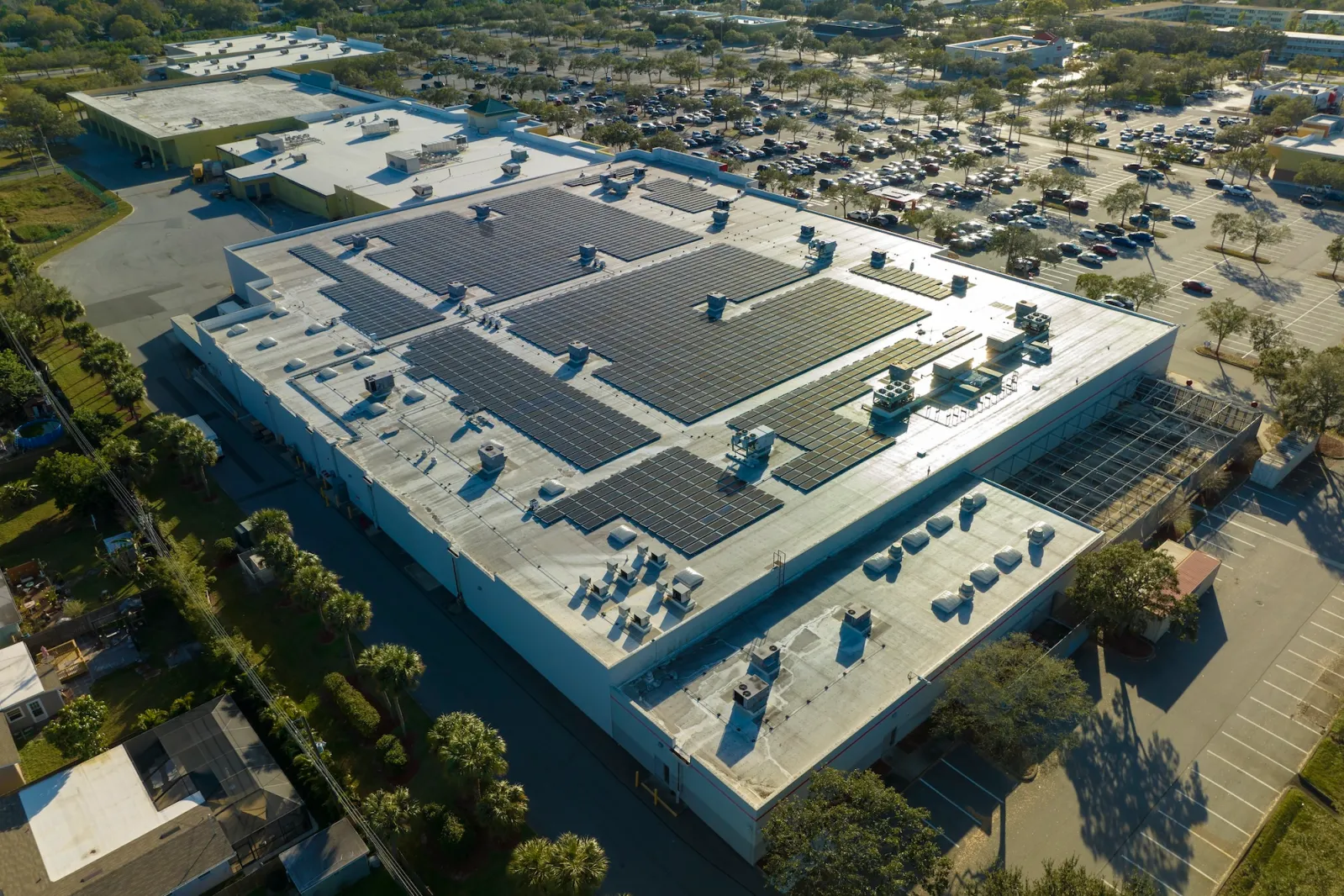
When a Delaware Statutory Trust sponsor underwrites a Midwest NNN retail acquisition in Kansas City, the physical condition of the roof is rarely the first item on the deal sheet — but it is often the first thing that destroys a distribution schedule. Kansas City's climate is defined by extremes: summer heat that softens and blisters low-slope membrane systems, winters that push freeze-thaw cycles hard enough to open seams around penetrations, and a hail corridor that runs right through the metro. Out-of-state DST operators and their asset managers frequently underestimate how quickly a roof in good condition at closing can deteriorate when Kansas City weather has a full season to work on deferred maintenance that never made it into the seller's disclosure.
DST sponsors acquiring NNN retail centers, flex industrial, and net-lease single-tenant properties along the I-435 corridor and in suburban Johnson County need a local commercial roofing relationship established before the purchase and sale agreement is signed. That relationship is what allows a sponsor to order a third-party roof condition report within days of going under contract, rather than scrambling to find a qualified contractor during a 45-day due diligence window that is already filled with environmental, structural, and title work. A fast mobilization — three to five business days to get a crew on every roof section — often makes the difference between a sponsor hitting a 1031 exchange deadline with complete due diligence or closing blind on the roof.
The roof condition report produced for a Kansas City DST acquisition is more than a pass-fail document. Sophisticated sponsors offering deals through broker-dealers expect the report to quantify remaining useful life, identify ponding water risks on flat TPO and EPDM systems common to the metro's big-box retail stock, flag any storm damage that could support an insurance claim, and provide a cost estimate for deferred maintenance. That cost estimate feeds directly into the reserve adequacy section of the offering memorandum. Investors and their registered investment advisors scrutinize those reserve figures. An underfunded capital expenditure reserve tied to a roof with seven years of remaining life is a compliance and reputational issue for the sponsor — not just an operational one.
Canopy Capital Group, a DST sponsor active in Midwest NNN retail, has structured several Kansas City-area offerings in the past 24 months. The due diligence approach on those deals treated the roof condition report as a binary gate: if the report revealed immediate repairs exceeding a defined dollar threshold, the deal was re-priced or walked. That discipline requires a roofing contractor who can turn a complete written report — not a verbal walkthrough — within the window the sponsor's timeline allows. When 1031 exchange investors are already identified and the replacement property identification window is counting down, a slow roof report is a deal killer.
Once a Kansas City DST closes and moves into its hold period — typically five to ten years for NNN retail — the property management structure becomes largely passive. The tenant often handles day-to-day maintenance under a triple-net lease, but the lease language on roof responsibility varies by deal, and the DST trustee retains an obligation to the beneficiary investors that does not disappear because a lease says "tenant responsible." A roof failure that interrupts a tenant's operations, triggers a rent abatement clause, or forces an emergency repair the trust is not funded to handle is an investor relations crisis. Sponsors who built a roofing relationship during due diligence have a contractor they can call at two in the afternoon on a Wednesday in February when a freeze-thaw event opens a seam over a tenant's stockroom.
Hail is the specific climate risk in Kansas City that out-of-state operators most frequently underinsure. The metro sits in one of the highest-frequency large-hail zones in the continental United States. A single storm can cause damage across a multi-tenant retail center that looks cosmetically minor from the ground but has compromised membrane integrity across thousands of square feet. A roofing contractor with Kansas City experience knows how to document that damage in a format that supports an insurance claim, and knows which carriers and adjusters are active in this market. That post-storm documentation capability is a real asset to a DST sponsor managing a hold-period property from a remote office.
The 1031 exchange timeline that brings most DST capital to Kansas City creates a structural urgency that is easy to misunderstand. A buyer identifying a Kansas City retail center as a replacement property under a 1031 exchange has a fixed calendar. The 45-day identification window and 180-day closing deadline are statutory. Within that window, roof due diligence must be completed, any required repairs must be priced, and reserve adjustments must be reflected in the final offering documents. A contractor who responds in 24 hours and delivers a written report in 10 to 14 business days is not a vendor amenity — they are a functional part of the deal team.
Roof system types in Kansas City's commercial real estate inventory skew toward mechanically attached TPO on low-slope retail and built-up systems on older flex industrial, with metal panel roofing increasingly common on newer construction in the logistics corridors near KCI. Each system has a different failure profile in a freeze-thaw climate. TPO seam failures tend to concentrate around drains and parapets where thermal movement is highest. Built-up systems develop blistering that is invisible until it splits under hail or foot traffic. A roofing contractor who can assess multiple system types and produce a single consolidated report across a portfolio acquisition is the contractor DST sponsors and their asset managers want on call before the letter of intent is signed.
Commercial property owners and DST asset managers operating in the Kansas City market benefit from working with a roofing contractor who understands both the physical demands of the local climate and the documentation standards that institutional capital requires. A roof condition report that satisfies a due diligence checklist, supports offering memorandum reserve adequacy, and provides a baseline for hold-period maintenance planning is a different deliverable than a repair estimate. The contractors who can produce that institutional-quality report — and then execute the repairs, preventive maintenance, and emergency response that follows over a multi-year hold — are the contractors worth identifying before the next acquisition crosses your desk.
- How does a roof condition report fit into 1031 exchange due diligence on a DST acquisition?
- A roof condition report is typically ordered during the due diligence window of the replacement property purchase. For a DST structured around a 1031 exchange, that window is fixed and often short. The report provides remaining useful life estimates, identifies deferred maintenance, and flags any conditions requiring immediate repair — all of which inform the reserve figures disclosed in the offering memorandum and the final purchase price negotiation.
- What should DST offering memorandum reserves account for regarding roofing?
- Offering memorandums for DST investments are required to include capital expenditure reserve projections. Roofing reserves should reflect the actual remaining useful life documented in the condition report, the cost to replace sections approaching end of life during the projected hold period, and a contingency for storm damage in high-hail markets like Kansas City. Underfunded reserves are a compliance concern and a frequent source of investor disputes during the hold period.
- Who is responsible for roof maintenance on a triple-net leased DST property during the hold period?
- Lease language governs this question and it varies by deal. Many NNN leases assign roof maintenance responsibility to the tenant, but the specific scope — repairs versus replacement, structural versus membrane — differs by lease. The DST trustee retains a duty to beneficiary investors regardless of lease terms, so sponsors typically maintain a roofing contractor relationship and conduct periodic inspections even when the tenant is nominally responsible for day-to-day maintenance.
- What turnaround time should a DST sponsor expect for a commercial roof condition report in Kansas City?
- A qualified commercial roofing contractor in Kansas City can typically mobilize for a site inspection within three to five business days of being engaged and deliver a written condition report within ten to fourteen business days of the inspection. Sponsors with multiple roof sections or a portfolio acquisition may need to plan for additional time. Building this timeline into the due diligence schedule from the letter-of-intent stage avoids last-minute pressure that can force a sponsor to close on incomplete information.
- How does out-of-state DST ownership affect roof maintenance and emergency response?
- Out-of-state ownership creates a gap between the person with authority to authorize repairs and the property where the problem is occurring. A DST sponsor or asset manager operating remotely needs a local roofing contractor who can assess emergency situations, communicate clearly in writing, and begin work under a pre-authorized scope without requiring a site visit from the sponsor. Establishing that relationship and pre-authorizing emergency response protocols before a storm season is the standard practice among experienced DST operators in the Kansas City market.
Ready to talk through a roof?
Tell us about the building and the roof problem. We'll document it and put a plan in writing — with an honest repair-vs-replace recommendation and no upsell pressure.
Get a Roof Assessment →