
Industrial Roofing in Kansas City, MO
Industrial Roofing for manufacturing facilities, warehouses, and industrial buildings throughout Kansas City metro.
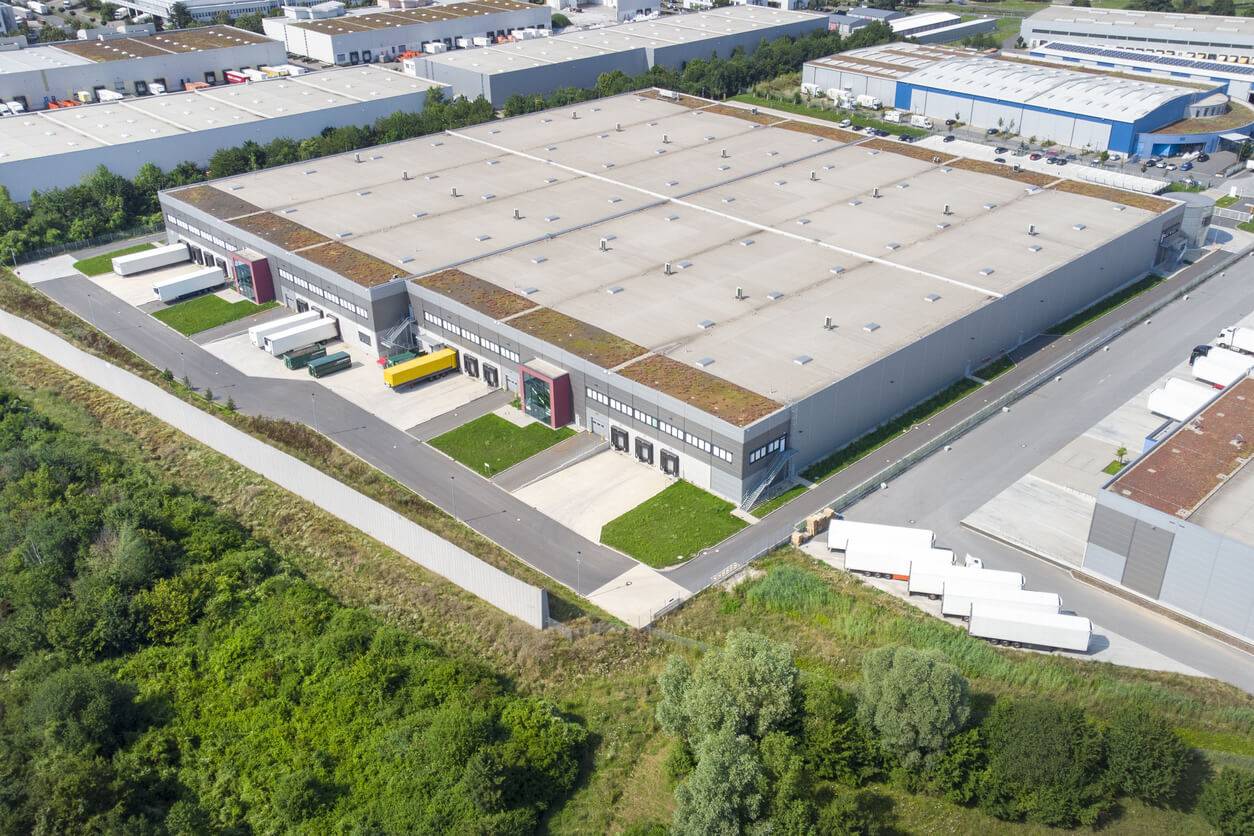
Kansas City is the second-largest rail hub in the United States. BNSF, Union Pacific, Kansas City Southern, and every other major railroad runs through here, which is why the industrial footprint around Port KC on the Missouri River, the Fairfax industrial district on the Kansas side, and the Richards-Gebaur legacy distribution corridor in Grandview is as concentrated and as diverse as it is. I-70, I-435, and I-470 form the industrial ring that ties it together. The Ford Claycomo assembly plant anchors the northeast. We work on industrial buildings throughout the Kansas City metro — Missouri side and Kansas side — and we understand what the climate here does to commercial roofs.
Kansas City's climate is a collection of competing extremes that make it one of the more demanding environments for commercial roofing in the Midwest. Thirty-eight inches of annual rain, thirteen inches of snow, and an active tornado and hail corridor that sees severe storm events every spring. Summer heat pushes surface temperatures on dark membranes above 160 degrees. Winters produce meaningful freeze-thaw cycling. And the spring and fall storm seasons deliver hail that damages roofing systems faster than almost any other single weather factor in this region. A roof specification for a Kansas City industrial building has to account for all of these simultaneously.
The Fairfax industrial district in Kansas City, Kansas sits along the Missouri River and represents some of the oldest and most active industrial real estate in the metro. The building stock here runs from pre-war masonry structures to mid-century heavy manufacturing to newer distribution facilities, and the range of conditions we find when we assess these buildings is wide. Some of the older Fairfax buildings have original structural configurations — saw-tooth roof profiles from manufacturing-era construction, heavy masonry parapets, complex drain layouts — that require custom flashing details and a contractor who can work with what's there rather than what a standard spec sheet assumes. We've done enough Fairfax projects to understand what these buildings need.
Port KC's Missouri River inland port generates significant industrial activity on the north side of the city, and the warehousing and distribution facilities in that corridor have the moisture exposure that comes with proximity to a major river system. River-adjacent industrial buildings in Kansas City see higher ambient humidity than inland facilities, and on buildings with continuous ventilation or dock door cycling, the interior moisture load is substantial. Vapor management in the roof assembly isn't optional on these buildings — it's the difference between a roof that lasts twenty years and one that shows deck corrosion under the membrane at year twelve.
The Ford Claycomo assembly plant in Kansas City, Missouri is one of the largest automotive manufacturing facilities in the Midwest, and the supplier and logistics ecosystem around it includes dozens of industrial buildings in the northeast metro. These are high-value operations with continuous production schedules, and roof failures create direct production cost impacts. On active automotive manufacturing support facilities, we plan work to minimize shutdown exposure — pre-ordering materials, staging crew capacity to move fast when conditions allow, and building aggressive weather-window schedules. A one-hour production delay at an automotive plant is expensive; a roof failure that shuts a stamping operation for a day is catastrophic by comparison.
Hail is the weather factor that drives more Kansas City industrial roofing discussions than any other single issue. Tarrant County gets hail; the Kansas City metro is in one of the most active hail corridors in the country. Large-hail events — two-inch diameter and above — have occurred here multiple times in the past decade. On single-ply membrane systems, hail at that scale can create direct punctures or bruising that fails over time. TPO and PVC systems with hail-resistant formulations and appropriate backing materials perform better than standard membranes in hail events, and some FM-rated hail-resistant assemblies carry specific warranty provisions for hail damage that standard assemblies don't. We recommend hail-resistant specifications on all new Kansas City industrial roofing projects.
The Richards-Gebaur and Grandview distribution corridor along I-49 south of the city has been growing as e-commerce and logistics demands have expanded. These are mostly newer tilt-up and steel-frame buildings with modern single-ply roofing systems. The challenge in this corridor is that the buildings are large enough — 500,000 square feet and above in some cases — that drainage design is critical and mistakes in the original installation compound significantly on a large footprint. Ponding zones on large roofs in Kansas City's spring rain season can hold substantial water weight, and we've assessed buildings in this corridor where the roof dead load from accumulated debris, ponding water, and multiple membrane layers was approaching the deck's design limit.
Kansas City summers create a specific membrane challenge from the combination of extreme heat and UV. Modified bitumen cap sheets that aren't protected with a reflective coating or surfacing can deteriorate within five to seven years in this climate. Asphaltic systems need periodic inspection of the surfacing layer and re-coating before the underlying bitumen is exposed. We have maintenance programs that include surfacing condition as a primary inspection point on modified bitumen buildings in the Kansas City metro, and we recommend re-coating as a preventive measure before the surfacing fails rather than as an emergency response after it does.
Emergency response capability matters in Kansas City because the storm events here can be sudden and severe. Tornado activity, severe hail, and high-wind events can damage a large number of industrial buildings in the metro in a single storm. We maintain emergency response capabilities with the crew depth and material inventory to respond quickly when storm damage occurs. Post-storm assessments, emergency tarping, and accelerated repair scheduling are services we provide as part of our storm response program. Having a contractor relationship established before the emergency — rather than trying to find someone after a major storm event when every roofing contractor in the region is booked — is the right way to manage that risk.
Whether you're managing manufacturing, distribution, rail-served warehousing, or automotive supply chain facilities in the Kansas City metro, we're the commercial roofing contractor with the experience to handle what this market's climate and building stock demands. Kansas City's industrial sector runs hard, and the roofs protecting it need to do the same.
Questions Owners Ask
Hail-resistant roof specifications are the primary tool. FM-rated hail-resistant assemblies using high-density cover boards under the membrane significantly improve impact resistance compared to standard assemblies. Membrane thickness matters too — a 60-mil TPO handles hail impact better than a 45-mil membrane. On buildings where hail damage has been recurring, we've also recommended ballasted systems or aggregate surfacing on certain building types where the ballast provides a physical buffer. The most important step after any significant hail event is a professional inspection — hail damage isn't always visible without getting on the roof, and undocumented damage that compromises the membrane will compound before the next inspection cycle.
Fairfax buildings, particularly the pre-1970 stock, were built for heavy industrial use with structural configurations that modern commercial roofing specs weren't designed around. Saw-tooth roof profiles, heavy masonry parapets, complex drainage layouts with interior downspouts — these require custom flashing details and site-specific design rather than standard spec application. The buildings also often have multiple generations of roof overlay, which requires core sampling before writing a proper proposal. We approach Fairfax projects with extra pre-bid investigation time, because finding unexpected conditions mid-project on a building that complex is costly for everyone.
Tornado impact on a building is typically a total-loss event for the roof and often the structure, and no practical roofing specification will prevent that. What we do address is the elevated wind environment that comes with the Kansas City storm pattern — including the straight-line winds and microbursts that accompany severe thunderstorms without producing an actual tornado. Perimeter attachment is engineered to FM wind uplift standards appropriate for the Kansas City wind zone, edge metal is securely fastened, and perimeter seams are detailed with extra care. These measures address the realistic wind events that damage roofs in Kansas City annually without claiming protection against a direct tornado strike.
Both Missouri and Kansas follow the International Building Code, so the base requirements are similar. The Kansas City metro covers multiple jurisdictions — Kansas City MO, Kansas City KS, Overland Park, Johnson County, Jackson County — and each has its own permitting office, although the code base is consistent. The main practical difference for large industrial facilities is which jurisdiction's permits you need and the specific inspectors involved. We handle permitting in all metro jurisdictions and are familiar with the specific processes in each. For large projects that span both state lines — which occasionally happens on major campuses — we manage both permit processes simultaneously.
Older modified bitumen systems in Kansas City need annual inspection with focus on surfacing condition (aluminum or granule cap sheet erosion), base flashing condition at all curbs and penetrations, and drain sump area integrity. The primary maintenance intervention is re-coating when the surfacing shows erosion — aluminum-based reflective coatings applied before the underlying bitumen is exposed can extend the service life by five to eight years. Base flashings at penetrations typically need attention every five to seven years in Kansas City's climate because the thermal cycling here stresses asphalt flashings more than in more moderate climates. A documented maintenance program on a modified bitumen roof can push total service life to twenty-five or thirty years, which significantly changes the capital planning math.
Ready to talk through a roof?
Tell us about the building and the roof problem. We'll document it and put a plan in writing — with an honest repair-vs-replace recommendation and no upsell pressure.
Get a Roof Assessment →