
Storm Damage Roof Repair & Insurance Claims in Kansas City, MO
Storm Damage Roof Repair & Insurance Claims in Kansas City, MO — commercial roofing assessment, documentation, and program management for MO property owners.
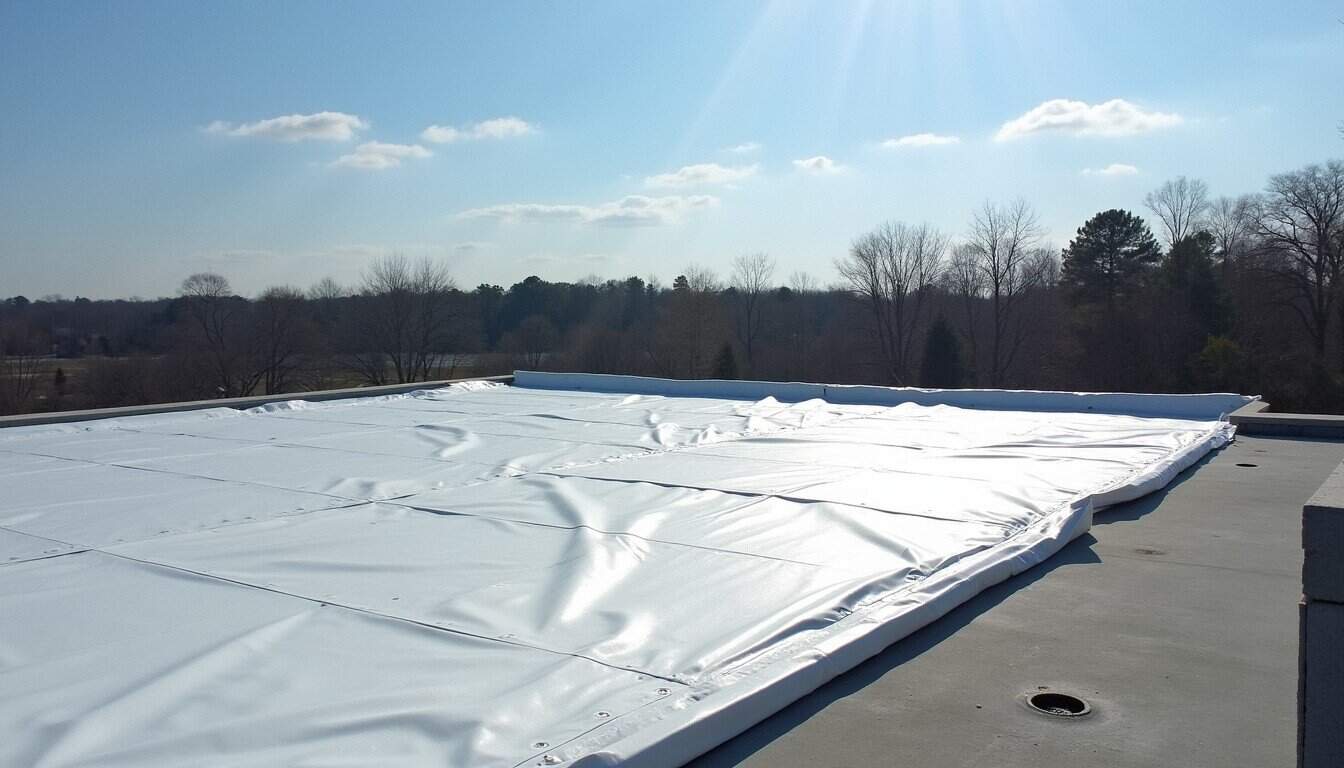
Kansas City's commercial market spans the I-35 and US-169 industrial corridors, the Power and Light District and Crossroads redevelopment zones, the South Kansas City industrial belt, and the expanding Lee's Summit and Overland Park employment areas. Storm damage documentation and insurance claim roofing in this market requires a contractor who can produce GPS-tagged hail impact maps, wind damage assessments, and supplemental claim documentation in the format that commercial property adjusters use — not just a repair estimate, but the evidence package that gets the claim approved at full scope.
Storm damage roof repair and insurance claims in Kansas City, MO require documentation at a precision that standard repair work doesn't. A successful commercial insurance claim starts with a damage assessment that identifies hail impact density, wind-related membrane displacement, flashing damage, and equipment damage — all documented with GPS-tagged photography, impact measurements, and a written assessment formatted for the insurance adjuster processing the claim. We've worked with commercial property insurers and public adjusters throughout MO and know what documentation gets claims approved.
Hail damage to commercial TPO and PVC roofing membranes in Kansas City is not always visible to the naked eye at ground level, and it's often missed in cursory roof walkovers by adjusters who don't specialize in commercial roofing. Hail impact patterns create membrane fatigue that accelerates seam failure and UV degradation — the visible effect appears months or years after the storm, not immediately. We document hail impact density with close-range photography and, where needed, thermal imaging that reveals subsurface impact damage. That documentation is the basis for a complete claim.
Wind damage claims at commercial properties in Kansas City typically involve membrane displacement or blow-off at laps, flashings, and edge metal — the first areas to fail under sustained wind load. We document the displacement pattern, confirm the failure mode (installation vs. weather-related), and provide a written assessment that distinguishes storm-related damage from pre-existing conditions. That distinction is critical to claim approval, and our documentation makes it clearly.
Once a claim is approved, we work within the insurance settlement to deliver the approved scope. If the approved settlement is below the documented repair cost — which is common after events where multiple contractors are competing for claims — we provide supplemental documentation and work directly with your adjuster to close the gap. We don't ask property owners to absorb shortfalls that result from incomplete initial documentation.
Storm Damage & Insurance Claim Roofing Questions
Our hail damage assessment includes: GPS-tagged photographs of impact locations across the full roof surface, impact density measurement per section, membrane cross-section sampling at impact locations (where the adjuster requires physical evidence), and a written assessment that documents the impact pattern, estimated hail size based on impact geometry, and the membrane's remaining serviceable life post-impact. This documentation matches the format that commercial property adjusters use to process hail claims.
On TPO and PVC membranes, moderate hail (1" diameter and above) leaves impact impressions in the membrane surface — circular depressions where the hail compressed the membrane and underlying insulation. The impressions are often not visible without close-range inspection on a dry surface in low-angle light. The damage weakens the membrane at impact points, creating stress concentration locations that accelerate future seam and surface failures. Our hail documentation shows the impact density map across your entire roof.
Yes. We communicate directly with the adjuster throughout the claim process — from the initial damage assessment through settlement and scope approval. If an adjuster requests a joint roof inspection, we participate. If the submitted documentation needs supplementation to support the full claimed scope, we provide it. Our goal is to close the claim at the full documented damage value, not settle for the first number the carrier offers.
Supplemental claims are common in competitive storm markets. When the initial settlement is below documented repair cost, we prepare a supplemental claim with the additional documentation needed to support the underpaid scope. Most supplemental claims in MO are resolved with additional documentation — adjusters typically approve the supplement when the documentation is complete and correctly formatted. We manage that process for you.
We prioritize post-storm response in Kansas City. Emergency dry-in and temporary protection can typically be deployed within 24-48 hours of a major event — this stops active leaking while the full claim documentation is completed. Full damage assessment for insurance documentation is typically delivered within 3-5 business days of the initial site visit.
How we approach this work
Every Kansas City-area roof we touch starts the same way: a documented walk of the existing system. We photograph conditions by zone, check drainage and flashing details, probe seams and terminations, and pull moisture cores where saturation is suspected. Then we put a written record of what is failing — and why — in front of the owner before any price is discussed. That report separates urgent repair from capital replacement so you only spend on what the building actually needs, and it gives you something you can take to ownership, a board, or a lender.
For storm damage roof repair projects, we specify assemblies built for the Missouri and Kansas climate: hail and straight-line wind, heavy snow and ice load, hard freeze-thaw cycling, and the summer heat that drives membrane and seam fatigue across the Kansas City metro. We install manufacturer-certified systems to spec, sequence work around tenants and rooftop equipment, and close out every job with the warranty paperwork and photo documentation owners need for budgets and future reference.
What you can expect
- A documented condition report before any scope is priced — no verbal estimates.
- Repair-first recommendations that separate what is urgent from what can be planned.
- Manufacturer-certified installation with full closeout records and warranty registration.
- Work sequenced around your operation, with priority response when a roof fails.
- One point of contact from the first walk through final sign-off.
Systems and details we work with
Most of the flat and low-slope roofs we service in the Kansas City metro are single-ply membranes — TPO and PVC heat-welded systems, or EPDM in fully adhered and mechanically attached configurations. We also detail built-up and modified bitumen roofs, install standing-seam and architectural metal, and apply silicone and acrylic restoration coatings where the existing deck and insulation are still sound. The right answer depends on the condition of what is already up there, how long you plan to hold the building, and how the roof has to perform through Kansas City's seasons — which is exactly what the condition report is for.
Flashings, penetrations, drains, and edge metal are where most commercial roofs actually fail, so that is where we spend our attention. We rebuild curb and parapet flashings, reseal pitch pans and pipe boots, correct ponding with tapered insulation, and bring drainage back to where water leaves the roof instead of sitting on it. Where a tear-off is not yet justified, a recover or coating can buy years of additional service life — and we will tell you honestly when that is the smarter spend and when it is throwing money at a roof that needs to be replaced.
Repair, replace, or maintain — documented, not guessed
The hardest question for most building owners is whether to keep repairing a roof or replace it. We answer that with evidence: core samples that show how wet the insulation is, infrared or moisture-meter readings that map saturation, and a photo record of the failures we found. If targeted repairs and a maintenance plan will protect the building, that is what we recommend. If the assembly is past its service life and you are paying for the same leaks every storm, we lay out a replacement scope with the systems, sequencing, and rough budget you need to plan capital. Either way, you decide with the facts in front of you.
Why Kansas City building owners and property managers call us
We are commercial-only. We do not chase residential re-roofs between bigger jobs — flat and low-slope commercial roofing is the whole business. That means crews who know single-ply welding, built-up and modified bitumen detailing, metal flashing, and coating application, plus a project approach grounded in occupied buildings that cannot simply close while the roof is open. We coordinate around business hours, protect interiors and rooftop equipment, and keep the site clean and safe while the work is underway.
If you manage a building across the Kansas City metro, we can document the roof, scope the work, and put a written plan in your hands. Explore related work like Auto Dealership Roofing, Church Roofing, Commercial Reroofing, Commercial Roof Replacement, or browse all of our services. When you are ready, request a roof assessment and we will walk the roof, document what is failing, and give you an honest repair-vs-replace recommendation with no upsell pressure.
Ready to talk through a roof?
Tell us about the building and the roof problem. We'll document it and put a plan in writing — with an honest repair-vs-replace recommendation and no upsell pressure.
Get a Roof Assessment →