
Government and Municipal Building Roofing in Kansas City, MO
Commercial roofing for city halls, courthouses, fire stations, police stations, and public facilities throughout Kansas City, MO.
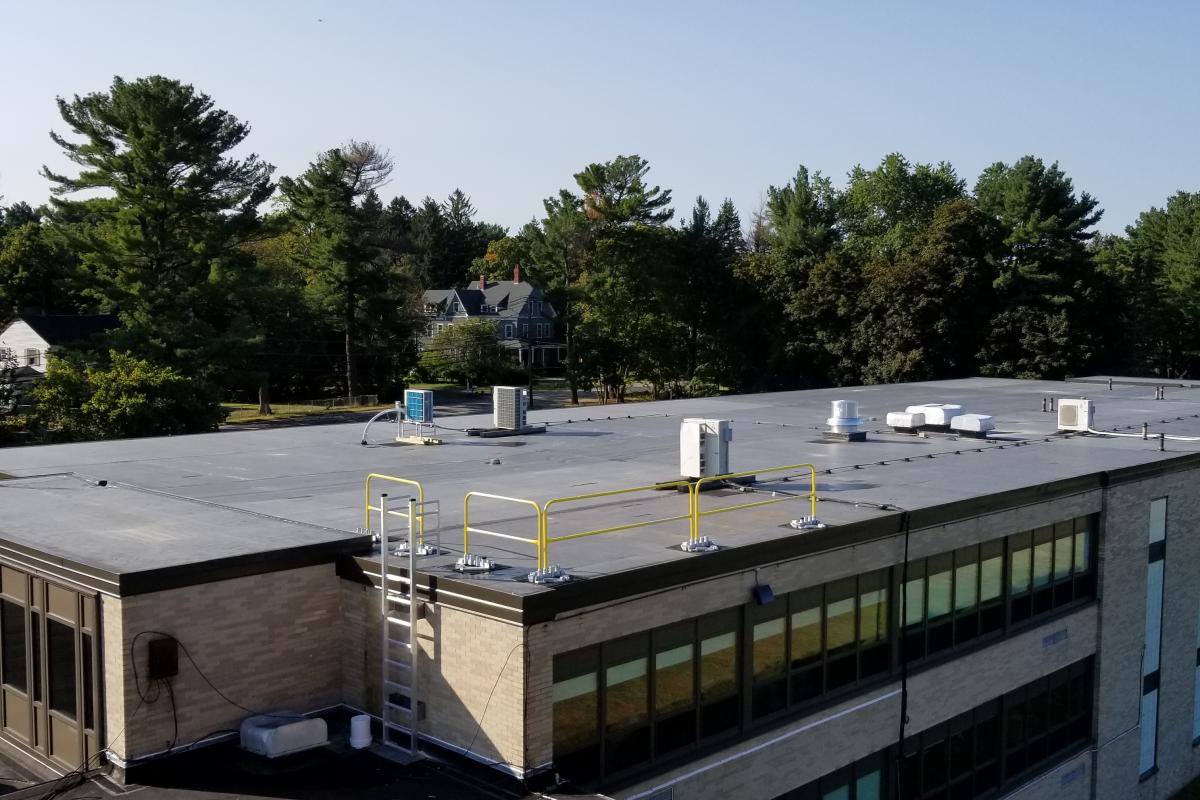
Kansas City, Missouri occupies a unique position in the municipal construction market as a major metropolitan city that also maintains robust relationships with two distinct state governments—Missouri and Kansas—and whose broader metropolitan area encompasses 15 counties across the state line. For roofing on City of Kansas City, Missouri-owned facilities, the relevant framework is Missouri Revised Statutes Chapter 107, which governs municipal public works contracting. Kansas City's public buildings include the historic City Hall on East 12th Street—one of the tallest city halls in the United States—the Jackson County Courthouse on Oak Street, the Kansas City Public Library's Central Branch in the former Federal Reserve Building on East 10th Street, the Kansas City Police Department headquarters on Locust Street, and the Fire Department's 47 stations distributed across the city's 319-square-mile footprint. Contractors bidding on City work must register on the city's vendor portal and hold appropriate Missouri state contractor licensing for the scope of work being performed.
Kansas City's position at the center of the North American continent creates a roofing climate that delivers the full range of weather extremes within a single annual cycle. Average annual precipitation runs 40 inches, distributed across powerful spring thunderstorm systems that routinely produce golf-ball-size hail, summer heat indexes pushing past 105 degrees with high humidity, and winter ice storm events that can deposit more than an inch of freezing rain across the city in a single event. The combination of hail frequency and thermal cycling has driven Kansas City's Facilities Management Department to specify 60-mil TPO as its baseline membrane on all flat municipal roofs, with enhanced fastener patterns in the high-uplift perimeter and corner zones as defined under FM Global's wind uplift criteria. Contractors who routinely work in Kansas City municipal work should maintain active FM approval documentation for their standard installation procedures and carry hail impact resistance test results for all proposed membrane systems as a standard part of their material submittal package.
Missouri's prevailing wage law, administered by the Missouri Department of Labor and Industrial Relations, requires that workers on public works projects be paid at the prevailing hourly wage rate for the applicable trade classification in the county where the work is performed. Jackson County prevailing wage rates are published annually and establish the floor for all roofing labor on Kansas City, Missouri government projects. Contractors must post the prevailing wage notice at the job site, maintain certified payroll records, and submit payroll documentation to the awarding authority on request. Missouri's prevailing wage enforcement mechanism includes the ability of affected workers to file wage complaints directly with the Department of Labor, and the Department has the authority to seek wage restitution, penalty assessments, and contractor debarment for documented violations. Kansas City contractors should treat prevailing wage compliance as a zero-tolerance issue given the Department's active enforcement posture in the metro area.
Kansas City's historic building inventory creates roofing opportunities of unusual complexity and visibility. The Kansas City City Hall, completed in 1937 and listed on the National Register, has a distinctive Art Deco limestone facade and a multi-level roof configuration that presents access challenges and material selection constraints driven by the Missouri State Historic Preservation Office. The 18th and Vine Historic District—the heart of Kansas City's jazz heritage—contains several publicly supported arts and cultural facilities whose roofing work requires SHPO coordination. The Kansas City Landmarks Commission reviews proposed work on locally designated landmarks and historic districts under Chapter 63 of the City Code, adding a local preservation layer on top of the state and federal review processes. Contractors who have completed Section 106 consultations on registered properties in the Kansas City market and who have established working relationships with local preservation architects are better positioned to compete on these high-profile projects.
The Kansas City Public Library system, which operates 10 branches in addition to the Central Branch in the former First National Bank building, has undertaken significant capital investment in its facilities over the past decade. The Central Branch's distinctive facade—and its rooftop systems, which must be maintained without disrupting access to the historic banking hall below—presents one of the more architecturally constrained roofing scopes in the Kansas City public building market. The Library Board's Facilities Committee reviews all capital projects above $100,000 and requires presentations from the project team at two committee meetings before a contract is authorized: one at the design development stage and one at the 100-percent construction documents stage. Contractors who are selected through a prequalification process for library roofing work should plan their schedule around the Facilities Committee's monthly meeting calendar.
Kansas City Fire Department station roofing is administered through the City's Capital Improvements Division, which manages KCFD's 47 stations across a complex geographic coverage area that includes both the urban core and significant suburban and industrial districts along the I-70 and I-435 corridors. Many KCFD stations built between 1960 and 1985 retain original coal-tar pitch BUR systems that present both an environmental handling challenge and a significant replacement opportunity. Contractors who can demonstrate experience with coal-tar system tear-off and disposal—including proper material characterization, licensed transport, and disposal facility documentation—are favored on these older-station projects, as the City has encountered proposals from contractors who underestimated the complexity and cost of coal-tar waste management and subsequently requested change orders that disrupted project budgets.
Energy efficiency requirements for Kansas City municipal buildings are driven by the City's Climate Protection Plan and its commitment to the Paris Agreement goals adopted under the Mayors' Climate Leadership Group compact. The Facilities Management Department has incorporated a minimum R-30 overall assembly requirement for new roofing installations on occupied city buildings, and the Energy Management Division reviews all reroofing scopes on buildings with active energy monitoring agreements to verify that the proposed assembly meets or exceeds the target performance. Rooftop solar installations have been completed on City Hall, the Kansas City Convention Center, and several fire stations as part of the City's Power Purchase Agreement portfolio, and new reroofing specifications on buildings identified in the solar portfolio require that the membrane system be compatible with the existing or planned PV racking attachment pattern.
Jackson County's separate procurement process for county facilities—the Courthouse, the Historic Truman Courthouse in Independence, the County Administration Building, and the network of county health and social service facilities—operates through the Jackson County Purchasing Division and is advertised through the Missouri buySmart procurement portal. County projects involving federally assisted facilities—including the network of federally qualified health centers that occupy county-provided space—trigger Davis-Bacon compliance requirements that overlay the state prevailing wage floor. Contractors should maintain separate payroll certification streams for state-only and federally funded scopes when both types of work appear within the same contract, as the rate-setting methodology and documentation format differ between the Missouri Department of Labor and the U.S. Department of Labor processes.
Bonding requirements for Kansas City municipal roofing contracts are established by Missouri Revised Statutes Section 107.170, which requires performance and payment bonds at 100 percent of contract value for all public works projects exceeding $50,000. The surety must hold a valid certificate of authority from the Missouri Department of Commerce and Insurance. The City's standard contract also requires a three-year roofing warranty from the contractor, in addition to the manufacturer's system warranty, and the contractor warranty must be backed by a roofing bond or cash retainage held by the City for the warranty period. This dual-warranty structure—separate manufacturer and contractor instruments with the contractor instrument secured by collateral—is less common in other municipal markets and should be factored into the project's administrative cost and financing plan before bid submission.
- Does Missouri's prevailing wage law apply to Kansas City municipal roofing projects?
- Yes, Missouri's prevailing wage law requires that workers on public works projects be paid at the applicable prevailing rate for their trade classification in Jackson County. Rates are published annually by the Missouri Department of Labor and Industrial Relations and must be posted at the job site. Contractors must maintain certified payroll records and submit them on request; the Department actively enforces wage requirements and can seek debarment for documented violations.
- What hail resistance requirements apply to Kansas City public building roofing systems?
- Kansas City's high hail frequency has driven the Facilities Management Department to specify 60-mil TPO as its baseline flat-roof membrane, and contractors should carry hail impact resistance test results for all proposed systems as part of their standard material submittal. FM Global wind uplift documentation is also required for enhanced fastener patterns in perimeter and corner zones. Contractors should confirm that their proposed system has been tested under the specific hail size and frequency parameters appropriate to the Kansas City exposure environment.
- How does the Kansas City Landmarks Commission interact with historic preservation review on public buildings?
- The Landmarks Commission reviews proposed work on locally designated landmarks and historic districts under Chapter 63 of the City Code, issuing certificates of appropriateness before building permits are approved. For properties also listed on the National Register that receive federal funding, a parallel Section 106 consultation must be completed through the Missouri State Historic Preservation Office. Contractors should verify which review processes apply to a specific project and build the applicable approval timelines into the pre-construction schedule.
- What is the contractor warranty requirement on Kansas City municipal roofing contracts?
- In addition to the standard manufacturer system warranty, Kansas City's contract requires a separate three-year contractor workmanship warranty backed by a roofing bond or cash retainage held by the City for the warranty period. This dual-instrument requirement is less common than the single manufacturer warranty approach used in many markets and adds to the project's administrative and financing costs. Contractors should review the full warranty exhibit in the bid documents before finalizing their overhead and profit assumptions.
- How are coal-tar pitch BUR tear-offs handled on older Kansas City fire stations?
- Older KCFD stations with original coal-tar pitch systems require material characterization testing to determine applicable waste classification, followed by licensed transport and disposal at a facility permitted to accept coal-tar waste. The City's bid specifications for these projects include an environmental handling specification section that outlines documentation requirements. Contractors who have not previously completed coal-tar tear-off projects should obtain a characterization analysis and a disposal cost estimate from a licensed environmental contractor before submitting a lump-sum price on these scopes.
Ready to talk through a roof?
Tell us about the building and the roof problem. We'll document it and put a plan in writing — with an honest repair-vs-replace recommendation and no upsell pressure.
Get a Roof Assessment →