
Warehouse and Distribution Center Roofing in Kansas City, MO
Commercial roofing for warehouses, distribution centers, and industrial facilities throughout Kansas City, MO. TPO, EPDM, and metal roof systems.
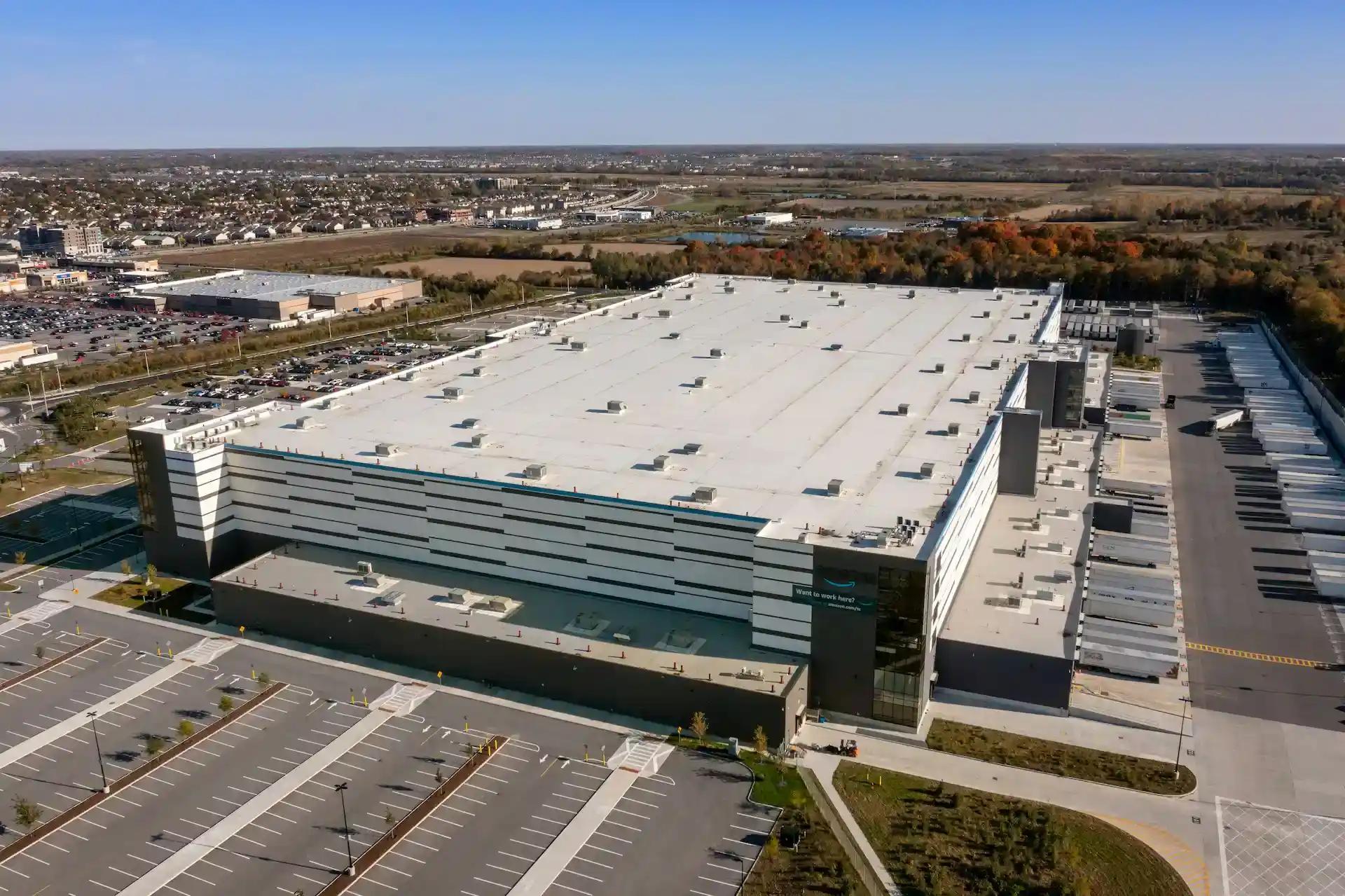
Cerner Corporation's sprawling campus in North Kansas City includes significant data center and fulfillment support infrastructure, but the metro's most visible distribution hub is the massive Amazon sortation center in Edwardsville, Kansas, which anchors a distribution corridor stretching from KCK to Lee's Summit that represents one of the Midwest's most dynamic industrial real estate markets. Kansas City's central geography — equidistant from both coasts and served by extensive rail and interstate networks — makes it a perennial top-five distribution market nationally, and the region's demanding climate creates consistent demand for roofing services on both new construction and the aging stock of distribution buildings that were built during earlier logistics booms.
Kansas City's climate is genuinely extreme by any measure: summer temperatures regularly exceed 100°F with high humidity, winter temperatures drop below 0°F, and the metro sits in the center of the continental United States' most active severe weather corridor, subject to hail events, tornadoes, ice storms, and rapid pressure drops that test roofing system wind resistance. This combination has made membrane selection a more complex decision in KC than in many markets. EPDM remains competitive for re-roofing projects and northern buildings where winter installation is required, while TPO is dominant on new construction due to energy code advantages. Some institutional owners specify PVC in hail-prone buildings, as PVC's harder surface profile provides better impact resistance than TPO at equivalent thicknesses.
Hail damage is a significant roofing risk in the Kansas City metro that demands explicit treatment in any roofing system specification. The area's insurance market has evolved such that many commercial property policies now require impact-resistant membranes — rated Class 4 under UL 2218 — for preferred premium rates. TPO membranes in 80-mil thickness from major manufacturers have achieved Class 4 ratings, and specifying this rating level at the outset avoids the retroactive insurance premium penalties that some KC warehouse owners have encountered after hail events damaged lighter-weight membrane systems.
Drainage engineering for Kansas City distribution roofs must account for both summer cloudbursts — the metro records 100-year 1-hour intensities above 3 inches — and the rapid snowmelt events that follow Midwestern warm spells in late winter, when feet of accumulated snow can melt over 48 hours. Primary and secondary drain systems must handle both scenarios, and drain sizing calculations should use the higher of the two load scenarios. Ice-and-water-shield lining at primary drains on buildings in the KC market is standard practice, as freezing of drain bodies during cold snaps can completely disable primary drainage and create catastrophic ponding loads.
Forklift exhaust ventilation on Kansas City distribution buildings must account for the extreme seasonal temperature swings that affect both exhaust equipment performance and the flashings surrounding it. Exhaust housings contract significantly in KC winters, and the gap that can open at the base of a hood during a January cold snap requires flashing details that maintain weathertightness across a temperature range exceeding 120°F. Custom-fabricated stainless-steel curbs with flexible membrane upturns at the curb-to-membrane interface are the appropriate detail for this demanding thermal environment.
Missouri and Kansas have separate contractor licensing regimes, and KC warehouse contractors must navigate both systems depending on which side of State Line Road their project falls on. Missouri does not require a state-level roofing contractor license but requires compliance with local municipal licensing requirements in KC and the surrounding jurisdictions. Kansas requires a Home Improvement Contractor registration but not a specialty roofing license for commercial work. Local Kansas City jurisdictions including KCMO, JOCO, and Wyandotte County have their own permit and inspection requirements that experienced contractors navigate as a matter of course.
Energy code requirements for Kansas City warehouse roofs span two climate zones: KCMO falls in Climate Zone 4A, while communities further north or at higher elevation can be in Zone 5A. Both zones require minimum insulation R-values and cool-roof provisions under the applicable Missouri and Kansas state energy codes, which track IECC and ASHRAE 90.1. Owners of multi-building Kansas City portfolios benefit from engaging contractors who understand both jurisdictions' requirements and can ensure consistent compliance across state lines.
The Kansas City commercial roofing market has several strong regional contractors with deep roots in the distribution sector, and these firms have developed efficient mobilization capabilities for large-scale re-roofing projects on active facilities. The region's severe weather patterns mean that responsive emergency repair capability is also a key evaluation criterion — when a hail event damages multiple roofs simultaneously, contractors who can rapidly mobilize emergency tarping and temporary repair crews protect owners from the cascading inventory and business interruption losses that follow extended water infiltration.
Preventive maintenance programs for KC distribution roofs should include post-storm inspections after each significant hail or wind event in addition to the standard biannual cycle. Given the frequency of severe weather in the region, these event-driven inspections can add two to four additional visits per year in an active season, but the cost is trivial compared to the value of catching storm-inflicted damage before it propagates through the membrane assembly into the insulation layer and deck.
- Why should Kansas City warehouse owners specify Class 4 impact-resistant membranes?
- Hail events are frequent in the KC metro, and the local commercial insurance market increasingly requires Class 4 UL 2218-rated membranes for preferred premium rates. 80-mil TPO from major manufacturers that have achieved Class 4 ratings avoids the retroactive premium penalties that lighter-weight systems can trigger after hail damage.
- How are drainage systems designed for Kansas City's dual climate threats?
- Systems must handle both summer cloudbursts (100-year 1-hour intensities above 3 inches) and rapid snowmelt events. Ice-and-water-shield lining at drain bodies prevents freeze-up that could disable primary drainage during cold snaps. Sizing calculations use the higher of the two load scenarios to ensure adequate capacity for both threats.
- Does Kansas City's location on the state line create licensing complexity?
- Yes. Missouri and Kansas have different contractor licensing frameworks, and local jurisdictions on both sides of State Line Road have their own permit and inspection requirements. Experienced KC commercial roofing contractors are familiar with both states' systems and can navigate multi-jurisdiction compliance on portfolio projects that span the state line.
- What membrane type dominates new Kansas City distribution building construction?
- TPO dominates new construction due to energy code advantages and heat-welded seam integrity. PVC is specified in hail-prone applications where its harder surface profile provides better impact resistance. EPDM remains competitive for re-roofing projects and for cold-weather installation windows when TPO's installation temperature requirements are difficult to meet.
- How should a Kansas City warehouse owner structure a preventive maintenance program?
- Standard biannual inspections should be supplemented with post-storm inspections after significant hail or wind events. Given KC's severe weather frequency, event-driven inspections can add two to four visits per year in active seasons. Rapid damage assessment after storms allows early repair before moisture infiltration propagates laterally through insulation.
Ready to talk through a roof?
Tell us about the building and the roof problem. We'll document it and put a plan in writing — with an honest repair-vs-replace recommendation and no upsell pressure.
Get a Roof Assessment →